


LED Driver Power Supply: Efficient Power Solutions Guide
 306
306What Is an LED Driver Power Supply?
LED drivers are electrical circuits or components that step down electrical power to drive LEDs (typically alternating current (AC) to direct current (DC) with constant current or constant voltage output) and unlike other power supplies, LED drivers take into account the non-linear electrical behaviour of LEDs to ensure their light output and performance is stable despite fluctuations in input voltage or environmental factors, which is essential for efficiency, reliability and safety in LED lighting systems
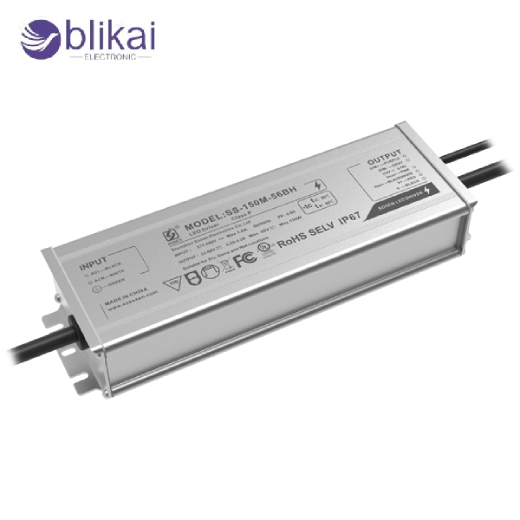
Constant Current vs Constant Voltage Drivers
LED drivers that deliver a constant current to the LED load are referred to as constant current drivers, and those that deliver a constant voltage to the LED load are referred to as constant voltage drivers. The difference between the two is important in selecting the right product for a particular lighting application and circuit design.
How LED Driver Power Supplies Work
LED driver power supplies are designed to convert electrical power through a series of steps to generate a regulated output to power LEDs, which usually involves rectification, filtering, regulation and feedback control, which constantly monitors output conditions and dynamically adjusts the driver performance to achieve a stable current or voltage output for LEDs despite fluctuations in input supply voltage or LED load, and this is important in unstable electrical environments.
AC to DC Conversion Process
AC to DC conversion involves rectification (AC to DC - using diodes) to produce a pulsating DC, filtering (using capacitors) to remove the ripples in the voltage, and regulation (using switching linear circuits) to produce a regulated output, which ensures that LEDs are fed with clean and stable power to enable efficient operation and low radiation.
Switching vs Linear LED Drivers
Switching LED drivers regulate the output efficiently with high-frequency switching, offering high efficiency and compact size, but linear drivers regulate the output simply by dropping the surplus voltage across a resistor, resulting in a simpler design with lower efficiency, and while switching LED drivers are generally preferred in today's applications for high efficiency and compact size, linear drivers are also used in low-power or low-noise applications where simplicity and low electromagnetic interference are required.
Key Components Inside LED Driver Power Supplies
LED driver power supplies are comprised of a number of key electronic components that contribute to power regulation and delivery, such as rectifiers, inductors, capacitors, and control integrated circuits (ICs), each of which is vital to the efficiency, stability and fault protection of the driver, and the design and selection of these components has a direct impact on the driver's performance and reliability.
Rectifiers and Diodes
Rectifiers and diodes are essential components for converting AC to DC, and avoiding reverse polarity and spikes in voltage (the first step in power conversion for LED drivers).
Inductors and Transformers
Inductors and transformers provide efficient energy storage and transfer in switching power supplies, which enables step-up (and step-down) of the voltage and eliminates power losses.
Capacitors and Filters
Capacitors (or capacitors) filter out variations and ripples in the voltage to provide a smooth output, which prevents flickering and extends the lifetime of LEDs.
PWM Controllers and IC Chips
PWM Drivers and ICs: PWM controllers and integrated circuits (ICs) are used to regulate switching patterns and output characteristics in order to adjust current, voltage and dimming.
Types of LED Driver Power Supplies
LED driver power supplies are available in various types to meet environmental, electrical and operational requirements, and the type of driver used is determined by considerations such as driver location, control and system complexity.
Indoor vs Outdoor LED Drivers
Indoor LED drivers are generally safe for indoor use (with low to no moisture and dust), whereas outdoor drivers are better protected (e.g., waterproof) and ruggedised for outdoor use.
Dimmable vs Non-Dimmable Drivers
Dimmable drivers can regulate the brightness (e.g., PWM or analog dimming) to save money and provide flexibility, but non-dimmable drivers have a fixed output for simplicity.
Isolated vs Non-Isolated Drivers
Isolated drivers offer safety through electrical isolation, but non-isolated drivers are compact and cost-effective, with safety features.
Key Specifications and Parameters to Consider
When choosing an LED driver power supply, there are some technical parameters that need to be checked for compatibility and efficiency, such as output voltage and current rating, efficiency, power factor, thermal and environmental protection, which impact the lighting system's operation and performance.
Output Voltage and Current Rating
It is important to match the driver's output to the LED load to avoid over-driving or under-driving the LED, which can lead to failure and inefficiency.
Efficiency and Power Factor
High efficiency decreases power loss and heat dissipation, while a high power factor ensures electrical power system efficiency and regulates the system.
Thermal Performance and Protection Features
Good thermal performance and protection features like overcurrent, overvoltage and short circuit protection improve reliability and safety.
IP Rating and Environmental Resistance
IP ratings stand for the protection against dust and water ingress, important for outdoor and industrial environments.
Applications of LED Driver Power Supplies
LED driver power supplies are used in many industry applications, as they offer efficient and stable power for lighting systems and can be used for a variety of purposes, including residential, industrial and smart lighting.
Residential Lighting Systems
LED drivers are employed in residential lighting systems to drive LED bulbs, strips and smart lighting to offer energy-saving and dimming capabilities.
Commercial and Industrial Lighting
LED drivers are used to drive high-power lighting in commercial and industrial applications like office buildings, warehouses and factories.
Automotive and Display Systems
LED drivers are crucial in lighting and display control in vehicles for accuracy and stability.
Smart Lighting and IoT Integration
LED drivers now enable LED smart systems and IoT, enabling remote control, automation and energy management.
Advantages of Efficient LED Driver Power Supplies
Efficient LED driver power supplies offer numerous benefits, including energy savings, increased LED lifespan, improved lighting and system performance and reliability, which are key to sustainable and cost-effective lighting solutions.
Common Problems and Troubleshooting
However, LED driver power supplies may suffer from flickering, thermal instability and compatibility issues, which can be attributed to driver mismatch, inadequate thermal design, and electrical interference and being aware of these problems enables troubleshooting and system optimization.
Flickering LEDs
Flicker can be caused by power supply instability, incompatibility with dimmers, or a lack of a filter.
Overheating Issues
Overheating is usually due to overloading or inadequate airflow, which can shorten life.
Driver Failure Causes
Failure may be caused by power surges, part degradation or installation issues.
Compatibility Problems
Incompatibility between the driver and the LED load may result in poor performance or instability.
How to Choose the Right LED Driver Power Supply
Selecting an LED driver requires careful consideration of load, operating environment, safety ratings and cost to ensure efficient performance and reliability.
Matching Driver to LED Load
Matching electrical characteristics is crucial for efficiency and safety.
Safety Certifications and Standards
Compliance with standards ensures quality and regulatory approval.
|
Attribute |
||
|
Manufacturer |
Richtek |
Richtek |
|
Topology |
Buck / Boost Controller |
Buck (Step-Down) |
|
Output Type |
External MOSFET |
Integrated Switch |
|
Input Voltage Range |
4.5V – 36V |
4.5V – 36V |
|
Output Capability |
Up to ~48V |
≈2A class |
|
Channels |
Single / Multi-string |
Single |
|
Switching Frequency |
~350kHz |
Up to ~1MHz |
|
Dimming |
PWM + Analog |
PWM + Analog |
|
Efficiency |
High (scalable) |
High (integrated) |
|
Package |
WQFN-16 (3x3) |
SOP-8 |
|
Protection |
OVP, OTP, Open LED |
OCP, OVP, Thermal |
|
Applications |
LCD Backlight, Panels |
General Lighting |
LED Driver Power Supply vs Traditional Power Supply
LED drivers are tailored to the electrical characteristics of LEDs, providing improved regulation, efficiency and protection, making them essential to achieve reliable and efficient lighting solutions.
Future Trends in LED Driver Technology
The future of LED driver technology will see a shift towards digital control, smart connectivity, improved efficiency and integration with renewable energy sources, all to meet the needs of smart and sustainable lighting.
FAQ
Can I use a normal power supply for LEDs?
It's not recommended, unless the power supply has the exact electrical characteristics, as incorrect power can ruin LEDs.
Why is my LED driver flickering?
Common causes include poor quality of the driver, unstable input voltage and incompatible dimming devices.
Conclusion
LED driver power supplies are critical components that provide efficient, stable and reliable operation for LED lighting, and with knowledge of their operating principles, types, specifications and applications, users can make informed choices to achieve optimal performance, minimise energy use, and prolong the life of their lighting systems in an increasingly energy-efficient environment.
Some images are sourced online. Please contact us for removal if any copyright concerns arise.





