


How to Fix a Throttle Position Sensor (TPS) Quickly
 151
151What Is a Throttle Position Sensor (TPS)?
A throttle position sensor (TPS) is an electronic device that is fitted on the throttle body that measures the throttle plate position and throttle plate motion and transmits real-time data to the engine control unit (ECU). This information allows the ECU to calculate the correct air-fuel ratio, ignition timing and transmission response based on the driver input on the accelerator pedal.
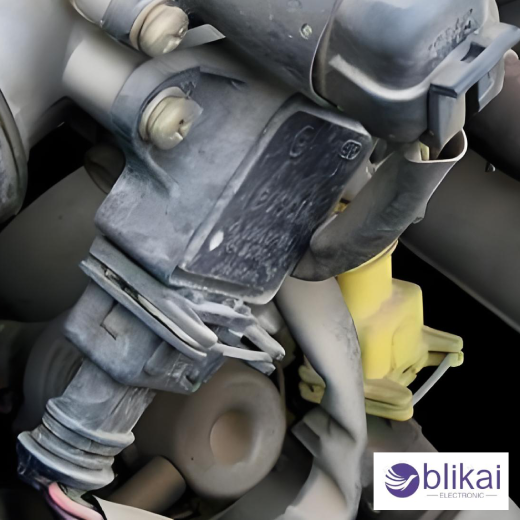
Common Symptoms of a Bad Throttle Position Sensor
Engine Hesitation or Poor Acceleration
Slowness in responding to a press of the gas pedal or slowness, this is one of the initial signs of a TPS failure which occurs when ECU is not getting the correct throttle angle data and is not delivering the necessary quantity of fuel during the acceleration cycle. The engine could be sluggish, act unpredictably or unexpectedly burst due to the sensor transmitting unequal signals.
Rough Idle or Stalling
Unstable TPS signal may lead to an increase and decrease in idle speed irregularly as ECU is not able to hold the right air-fuel ratio at low throttle openings. The drivers can report engine vibration, unexpected RPM drop or engine stalling during traffic light stops, particularly when the engine is hot.
Check Engine Light and Error Codes
In the present-day automobiles, TPS performance is observed at all times and in cases when the voltage level does not correspond to the norm, the ECU sends a diagnostic trouble code, including P0120, P0121, P0122, or P0123. These codes are used to show that there are problems with the circuit or performance, and they are an essential initial point of diagnosis with the help of an OBD-II scanner.
Sudden Fuel Consumption Increase
The faulty operation of TPS may lead to over injection of fuel since the ECU might understand the false throttle input as a high engine load, which leads to poor fuel consumption, black smoke erected in extreme cases, and high emissions.
Causes of Throttle Position Sensor Failure
Throttle position sensors work in an intolerant environment that is affected by vibration, heat and contaminants which slowly wear down internal parts and electrical connections.
Wear Inside the Sensor Resistor Track
In potentiometer-style TPS units, repeated throttle movement eventually wears down the internal resistive track, creating dead spots that interrupt voltage output and cause signal dropouts during acceleration or steady driving.
Wiring or Connector Problems
Damaged insulation, loose connectors, corrosion or broken wires may break the signal of a voltage between the sensor and the ECU to cause the same symptoms as sensor failure, although the TPS itself may have been damaged.
Dirt, Carbon Build-Up, or Moisture
Contamination inside the throttle body or sensor housing can interfere with sensor readings by restricting throttle movement or allowing moisture intrusion, which leads to unstable electrical signals and intermittent faults.
Tools Needed to Fix a TPS Quickly
Many throttle position sensors are easily fixed or replaced and do not need many automotive tools and only a few basic diagnostic instruments. The tools should be prepared in advance so that the process of repairing them does not involve unreasonable losses of time.
Basic Tools for DIY Repair
Screwdrivers, socket wrenches, needle nose pliers, safety gloves, electrical contact cleaner are some of the common tools that will be able to help remove and re-install the sensor safely and prevent connector damage.
Diagnostic Tools for Accurate Testing
The digital multimeter and the OBD-II scanner are necessary in order to validate the TPS failure since they make the user measure the voltage output, check the reference voltage supply, and read the stored error codes before changing the parts unnecessarily.
How to Diagnose a Faulty Throttle Position Sensor
Diagnosis will result in minimal time and costs wasted due to a few engine issues that may be similar to the symptoms of TPS failure. The systematic testing methodology will also help in correct identification of the root cause prior to making repairs.
Reading Trouble Codes with an OBD-II Scanner
An OBD-II scanner can be connected to the diagnostic port of the vehicle to either retrieve fault codes that have been stored and live sensor data to enable a technician to compare throttle position percentages with pedal input and to detect unusual signal behavior.
Testing TPS Voltage with a Multimeter
By testing the reference, ground and signal wires, and slowly opening the throttle, users can test the voltage variations and they should rise steadily within the range of operation without jumping and falling to ensure that the sensor output does not change as the throttle changes position.
Inspecting Wiring and Connectors
Inconsistency in readings can be due to corrosion or loose contacts therefore electrical repair can be evaluated as an alternative to sensor replacement that can be detected following a careful look at wiring harnesses, connector pins and grounding points.
How to Fix a Throttle Position Sensor Quickly (Step-by-Step)
Trying to fix a TPS fast is attempted by removing it safely, inspecting, cleaning/replacing, and re-installing it in place to get the throttle signal transmission realigned. This takes organized procedures that reduce the chance of installing an engine that encounters installation errors and with proper engine settings guaranteed, the likelihood of reliability is high.
Step 1 — Locate the TPS
The throttle position sensor is mounted directly on the throttle body, usually opposite the throttle linkage or integrated into the electronic throttle assembly, making it accessible once the engine cover or intake hose is removed.
Step 2 — Disconnect the Battery
Electrical shorting on the negative battery terminal is prevented, as well as the ECU is not exposed to voltage spikes, and adaptive engine parameters are restored prior to a new sensor being installed.
Step 3 — Remove the Sensor
Once the wiring connector is unplugged, take out mounting screws very gently and slide the sensor straight out and not too far to break the throttle shaft.
Step 4 — Clean or Replace the TPS
In case of contamination, the connector and throttle body could be cleaned with electronic safe cleaner, this could restore the functionality but worn internal parts cannot be repaired internally since sealed sensors are not fixable internally.
Step 5 — Install and Align the New Sensor
Install replacement sensor with proper alignment of throttle shaft and screws tighten in the right manner so as to fit in place properly as when using a new part the wrong placement may result in the readings taking the wrong values.
Step 6 — Reset ECU and Test Drive
Reconnect the battery, start the engine, allow idle stabilization, and perform a short test drive while monitoring throttle response and checking for returning fault codes to confirm successful repair.
TPS Reset and Calibration Methods
Following replacement, certain vehicles will need recalibration to allow re-education of the ECU regarding the throttle closed and throttle open position, to ensure that the ECU accurately interprets the signal when in operation.
Manual Idle Relearn Procedure
Many vehicles automatically relearn idle position after the battery is disconnected by allowing the engine to idle undisturbed for several minutes while the ECU recalibrates airflow and throttle parameters.
Scan Tool Calibration
Modern car engines must be calibrated by way of electronic diagnostic scan device, which determines throttle relearn procedures and aligns sensor information with the ECU memory in order to get the best possible performance.
Preventing Future TPS Problems
Preventive maintenance greatly prolongs the life of throttle position sensor due to contamination or bad electrical connection which causes many failures and not manufacturing defects.
Regular Throttle Body Cleaning
A regular cleaning of the throttle body to remove the carbon deposits which limit airflow and undue stress on the sensor mechanism is not only beneficial to idle stability but also throttle response.
Checking Electrical Connections Periodically
Inspecting connectors for corrosion and ensuring wiring harnesses remain secure reduces electrical resistance and prevents intermittent signal interruptions caused by vibration or environmental exposure.
FAQ
Can You Drive with a Bad TPS?
It is possible to drive with a faulty TPS but not advisable as there is unpredictable acceleration, low fuel economy and possible stalling conditions which provide unsafe driving conditions and result in further engine issues.
What Happens If TPS Is Installed Incorrectly?
Poorly installed may also result in excessive idle speed, slow throttle response, or check engine lights that do not go off due to the ECU having erroneous readings of the baseline voltage by the misaligning sensor.
Conclusion
Most ordinary vehicle operators can easily fix a throttle position sensor within a few hours and with the help of limited tools and a systematic diagnostic process because the throttle position sensor is a fairly simple yet extremely important electronic part that interprets driver input into engine response. Early symptom identification, voltage signal testing and proper replacement/calibration can enable drivers to have a smooth acceleration, stable idle operation, and optimum fuel efficiency without incurring costly repair expenses. Periodical throttle body repair and electrical checks also lead to decreased future TPS issues, which would guarantee its reliability and uniform engine behavior in the long run.
Some images are sourced online. Please contact us for removal if any copyright concerns arise.





