


How to Test an Oxygen Sensor: Step-by-Step Guide (DIY)
 204
204What Is an Oxygen Sensor?
An oxygen sensor or O2 sensor is an electrochemical instrument installed on the exhaust system of a vehicle to identify the oxygen concentration of exhaust gases to indicate whether the engine is running rich or lean. The sensor feeds the ECU, which constantly varies the time and duration of fuel injection to sustain the optimal air-fuel ratio needed to achieve good combustion and emission control. In the present-day vehicles, several oxygen sensors are provided in front and after the catalytic converter to detect the efficiency of combustion and the activity of the emission system.
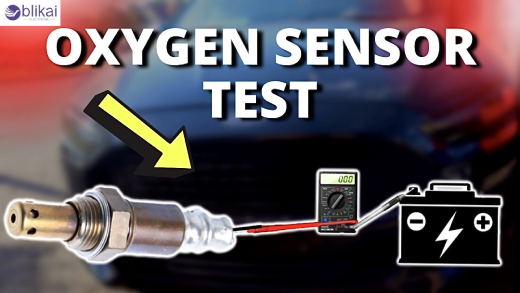
Oxygen Sensor Working Principle
The majority of traditional oxygen sensors utilize a ceramic element of zirconium dioxide that is covered with a porous platinum electrode that produces a voltage upon encountering differences in oxygen concentration levels between exhaust gas and outside air. The sensor measures the voltage when the mixture is rich, that is, when there is less oxygen in the exhaust. The sensor generates a higher voltage, and when the mixture is lean, that is, the sensor generates a lower voltage, so the ECU can ensure that fuel is closed-loop controlled by constant voltage switching.
Upstream vs Downstream O2 Sensors
Before the catalytic converter, the upstream oxygen sensors mainly regulate the adjustments in the fuel mixture and those that are placed after the catalytic converter do not directly affect the portion of fuel to be delivered, but control the efficiency of the catalytic converter. This difference is significant as testing and performance are a little different between these sensor locations.
Types of Oxygen Sensors
In automotive applications, narrowband or switching voltages around the stoichiometric ratio and wideband or air-fuel ratio sensors that give a more accurate measurement of the mixture over a wider range, and heated oxygen sensors (HO2S) with an internal heating element to be able to reach operating temperature within a short time and improve the performance of cold-start emissions are common.
Symptoms of a Bad Oxygen Sensor
A defective oxygen sensor could have an impact on various engine functions since incorrect feedback would interfere with ECU fuel management and emission control plans, resulting in observable performance and efficiency problems.
Engine Performance Problems
The motor can also exhibit rough idle, retarded acceleration, misfiring of the engine, or diminishing power levels since improper air-fuel ratios do not allow the engine to burn efficiently and maintain constant engine performance.
Increased Fuel Consumption
In cases where the ECU has false oxygen information, it tends to react by increasing the fuel mixture as an error buffer, which also greatly emits more fuel and decreases the overall efficiency of the vehicle.
Check Engine Light and Error Codes
A faulty sensor often causes the check engine light and the diagnostic trouble codes like P0130, P0135, or the oxygen sensor circuit faults, which are identified as signal or heater circuit issues, are recorded.
Failed Emissions Test
As oxygen sensors control the regulation of emissions directly, malfunctioning states can lead to the production of excessive amounts of hydrocarbons or nitrogen oxides, and lead to the failure of inspection in regulated areas.
Tools Needed to Test an Oxygen Sensor
Proper testing needs simple diagnostic equipment that has the ability to sense electrical signals and explain how the sensors act in operational circumstances.
Digital Multimeter
A digital multimeter allows measurement of voltage output, resistance of heater elements, and circuit continuity, making it the most accessible tool for DIY testing.
OBD-II Scanner
An OBD-II scanner measures fault codes stored and live sensor data streams, which offer insight into the behavior of the oxygen sensor during engine operation.
Oscilloscope (Advanced Testing)
Often, to analyze switching patterns of waveforms and response times in more depth than can be provided by a simple voltage reading, professional technicians may visualize these using an oscilloscope.
Safety Equipment
Since the work of oxygen sensors requires handling of very hot exhaust, protective gloves, eye protection, and care with the moving engine parts have to be observed during testing.
How to Test an Oxygen Sensor (Step-by-Step DIY Guide)
The test of an oxygen sensor is a combination of an electrical test and a live performance test to ensure that the sensor is responding properly to the varying engine environment.
Step 1 – Locate the Oxygen Sensor
Identify the sensor location along the exhaust pipe or manifold by consulting the vehicle service manual, noting whether the sensor is upstream or downstream, since this affects expected readings.
Step 2 – Perform a Visual Inspection
Melting insulation, corrosion or contamination of insulation. Check wiring harnesses, connectors, and insulation of a sensor that has failed due to oil leaks or road debris; many sensor failures are actually due to wiring damage, not sensor failure.
Step 3 – Check Trouble Codes
Connect an OBD-II scanner and retrieve stored diagnostic codes, then review live data parameters to confirm whether the ECU detects abnormal sensor behavior or heater circuit issues.
Step 4 – Test Heater Circuit Resistance
The engine should be turned off, the sensor connector should be disconnected, resistance should be measured across heater terminals with the multimeter, and generally, the readings should be within the manufacturer-specified values, which frequently range between 5 and 20 ohms depending upon the design.
Step 5 – Test Sensor Voltage Output
Start the engine and give it some time to warm up, and then measure signal voltage on the sensor output wire, where narrowband sensors should vary between 0.1V and 0.9V with varying fuel mixture as the ECU controls.
Step 6 – Perform Live Data Testing
Observe real-time scanner data to confirm rapid voltage switching several times per second at idle, indicating active closed-loop operation and proper sensor responsiveness.
Step 7 – Verify Sensor Response Time
Create temporary rich or lean conditions, such as briefly snapping the throttle or introducing a small vacuum leak, and verify that sensor voltage reacts quickly, as a slow response indicates aging or contamination.
Normal Oxygen Sensor Readings Explained
Understanding expected signal characteristics helps distinguish between normal operation and sensor malfunction.
Typical Voltage Range
The healthy narrowband oxygen sensor alternates between low voltage and high voltage continuously instead of being fixed as a constant, and shows continuous correction over fuel mixture by the ECU.
Switching Frequency
Normal sensors switch multiple times per second at idle, while slow switching or flat signals suggest degraded sensing material or electrical faults.
Wideband Sensor Signal Interpretation
Wideband sensors typically output current or reference voltage signals interpreted by specialized controllers, meaning traditional multimeter testing may not fully evaluate their accuracy without scan-tool data.
Common Oxygen Sensor Problems and Causes
Sensor failure is often the result of environmental exposure and engine conditions rather than simple electrical defects.
Carbon or Oil Contamination
Incomplete combustion, worn piston rings, or coolant leaks can coat the sensing element with deposits that reduce sensitivity and slow response.
Wiring and Connector Damage
High exhaust temperatures and vibration frequently degrade wiring insulation, causing intermittent signals or heater circuit failure.
Exhaust Leaks
Leaks near the sensor allow outside air to enter the exhaust stream, creating false lean readings even when the sensor itself is functioning correctly.
Aging and Thermal Stress
The accuracy of the sensor is reduced with repeated heating and cooling cycles, hence the finite service life of oxygen sensors.
Can You Drive with a Bad Oxygen Sensor?
Even though a vehicle can still run with a faulty oxygen sensor, long-term use may result in higher fuel consumption, which may also harm the catalytic converter because of inappropriate combustion and higher levels of emissions, which may cost the vehicle owner a lot of money, much more than replacing the sensor itself.
Safety Tips When Testing Oxygen Sensors
Never work on exhaust components before they are cool, never touch any rotating engine component when testing is live, and never touch the multimeter probe to any terminal next to the one you are testing, or you can harbor personal hatred of inadequate testing methods, or as a result, stand a risk of bodily injury or damage to vehicle electronics.
FAQs
Can I test an oxygen sensor without removing it?
Yes, the majority of the tests are conducted in the presence of the sensor with the help of a multimeter or scan tool in order to monitor the live voltage data.
Can a multimeter test a wideband oxygen sensor?
A multimeter can verify heater circuits and power supply, but accurate wideband signal analysis usually requires a scan tool or specialized diagnostic equipment.
Conclusion
A useful and useful DIY skill is testing an oxygen sensor, which takes simple measurement skills applied in the field of electronics, though it requires knowledge of automotive diagnostics to allow vehicle owners and technicians to determine the nature of performance issues in a short period of time, which ensures that the engine operates efficiently without causing any problems. Due to the knowledge of sensor working principles, identification of failure symptoms, and adherence to systematized testing protocols, one will be able to accurately diagnose the problem, avoid unnecessary replacement of parts, and preserve the key components of the emission system. Since the electronic control systems of modern automobiles are becoming more reliant on sensors, learning how to test oxygen sensors is one of the crucial steps to proper automotive maintenance and electronic troubleshooting.
Some images are sourced online. Please contact us for removal if any copyright concerns arise.





