


Motion Sensor Light: Components, Working Principles & Applications
 636
636Introduction to Motion Sensor Lights
Motion sensor lights refer to smart lights that automatically light up whenever there is movement inside a given space. These systems can be used to make use of electronic sensors, control circuits, and efficiencies in light sources to maximise energy efficiency, increase safety, and minimise manual operation. Motion sensor lights have been applied in residential buildings, offices, and industries, and they are now greatly utilized in modern-day automation and smart lighting solutions.
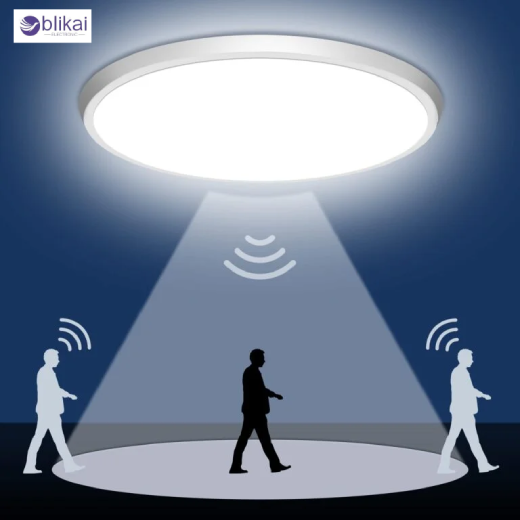
What Is a Motion Sensor Light?
The motion sensor light is an electronic lighting system in which the light is on when it detects any form of movement. In comparison to the old type of lighting, where people had to use a switch to turn the lights on or off, motion sensor lights are dependent on sensory technology like infrared or microwave signals to determine how people move. The systems are ideal in terms of security, energy saving, and convenience. Once the motion is detected, a control circuit can activate the light source for a preset time.
Core Components of a Motion Sensor Light
Motion Sensor Module
The fundamental detection element is the sensor module. Some of the common ones are Passive Infrared (PIR) sensors, dual technology sensors, and Microwave sensors. PIR sensors are sensors that can identify when the infrared radiation of hot objects changes, whereas microwave sensors are sensors that emit high-frequency signals and reflect when it comes to motion. Sensors that use dual-technology combine the two approaches to enhance accuracy.
Light Source (LED, CFL, or Halogen)
LED lighting is dominating the modern motion sensor lights because it is highly efficient, has a very long life span, and consumes very little power. LEDs also offer immediate brightness compared to the CFL or halogen lamps, lower heat production, and improved frequency of switching.
Control Circuit and ICs
The sensor module receives signals, which are processed by the control circuit, which decides when to turn the light on. It normally contains amplifiers, comparators, timers, and a microcontroller or dedicated control ICs. These units are used to control sensitivity, delay time and on-off logic.
Power Supply and Driver Circuit
Motion sensor lights can be powered on either AC or DC, using either a battery or a solar panel. The power supply circuit converts and regulates voltage, while LED driver circuits ensure stable current for consistent brightness and reliability.
Housing and Optical Elements
The enclosure does not allow internal components to be destroyed by dust, moisture, and other environmental forces. Fresnel lenses and other optical lenses are used to concentrate infrared radiation to the sensor and enhance the range of detection and precision of the sensor, particularly in PIR-based systems.
How a Motion Sensor Light Works
Motion Detection Principle
A sensor of a PIR-based system records a change in the infrared radiation when people, animals, or vehicles move. Microwave sensors work by emitting radio waves and analyzing frequency shifts caused by motion using the Doppler effect.
Signal Processing and Triggering
A weak electrical signal that is supposed to be filtered and amplified is the sensor output. The control circuit compares this signal against a predefined threshold. When motion exceeds the threshold, a trigger signal is generated.
Switching and Illumination Process
The control circuit operates on a relay or solid-state switch, once activated, to energize the source of light. A time counter maintains the light at a preset time before it is turned off automatically, unless it senses any more movement.
Types of Motion Sensor Lights
PIR Motion Sensor Lights
The most common type is the PIR motion sensor lights. They are economical, have low energy consumption, and are perfectly suitable for monitoring human movement within outdoor and indoor settings.
Microwave Motion Sensor Lights
Microwave sensor lights offer a longer detection range and can detect motion through thin walls or glass. They are commonly used in commercial and industrial applications, but may consume more power.
Dual-Technology Motion Sensor Lights
Dual-technology lights combine PIR and microwave sensors to reduce false triggering. The light is also activated by a combination of both sensors detecting motion, which makes it more reliable.
Solar-Powered Motion Sensor Lights
The lights are equipped with solar motion sensors which combine photovoltaic panels, rechargeable batteries and LED lights. They are best suited to outdoor mounting where wiring is inconvenient.
Applications of Motion Sensor Lights
Residential Applications
Motion sensor lighting finds extensive applications in homes to provide security lighting to the homes in garden paths, staircases, garages, and hallways. They enhance safety, as well as minimize electricity usage.
Commercial and Industrial Applications
Motion sensor lights contribute to operational efficiency and the safety of the work environment in warehouses, offices, parking lots, and factories because they ensure that the light is provided only when required.
Smart Home and IoT Systems
Smart Home Lighting Smart lights feature motion sensors. They are incorporated with building automation systems and remote control, and scheduling by smart switches and hubs.
Energy-Saving and Safety Applications
Green buildings, motion sensor lights in the public infrastructure, and emergency exits are based on motion sensor lights to save on energy wastage, while ensuring safety.
Advantages of Motion Sensor Lights
Motion sensor lights are energy-saving, extend the lamp life, and enhance security and automation. They are conveniently operated hands-free, which enhances their use both at home and in the industrial environment.
Disadvantages of Motion Sensor Lights
The possible limitations are false triggering due to pets or environmental conditions, restricted detection angles, and some types of sensors cannot perform in extreme temperature conditions.
Installation and Placement Considerations
The correct installation is important to ensure maximum functioning. Mounting height, sensor angle, range of detection, and environmental exposure are some of the factors that should be taken into consideration. Outdoor installations must be enclosed with a weather-proof enclosure with appropriate IP ratings.
Motion Sensor Light vs Traditional Lighting
The traditional lighting involves the use of motion sensor lights, which are safer, focused on saving energy and automated. The initial costs may be more, but energy savings and maintenance are likely to be less in the long term, worth the investment.
Common Problems and Troubleshooting
Light Not Turning On
Check power supply, sensor alignment, and sensitivity settings. Faulty wiring or damaged sensors may also cause issues.
Light Staying On Continuously
This problem is normally brought about by improper sensitivity or time-delay adjustments, or perpetual movement in the field of detection.
False Motion Detection
Environmental factors such as heat sources, moving vegetation, or reflective surfaces can trigger false detections. The problem is normally solved by making adjustments to the sensor location.
How to Choose the Right Motion Sensor Light
The criteria to be used in the selection of a motion sensor light include the kinds of sensors, the level of brightness (lumens), source of power, the extent of detection and the degree of resistance to the environment. These parameters should be correlated to the application so as to ensure that the performance and reliability are improved.
Future Trends in Motion Sensor Lighting
The future of motion sensor lighting is determined by the development of artificial intelligence-based detection, extremely small sensors, and the integration of smart grids. Such innovations will also increase accuracy, efficiency and connectivity.
FAQ
What components are inside a motion sensor light?
A motion sensor light is a type of light that comprises a sensor module, control circuit and power supply, a source of light and protective housing.
How does a PIR motion sensor light work?
It identifies the motion of hot objects in the infrared radiation and activates the light, respectively.
Are motion sensor lights energy efficient?
Yes, they significantly reduce energy consumption by operating only when motion is detected.
Where should motion sensor lights be installed?
They should be mounted mostly in places that need some form of automatic lighting, like in entrances, corridors, and open walkways.
What is the difference between PIR and microwave sensors?
PIR sensors detect infrared radiation, while microwave sensors use radio waves and Doppler shifts to detect motion.
Some images are sourced online. Please contact us for removal if any copyright concerns arise.





