


48V Battery: Power, Efficiency & Applications
 403
403What Is a 48V Battery?
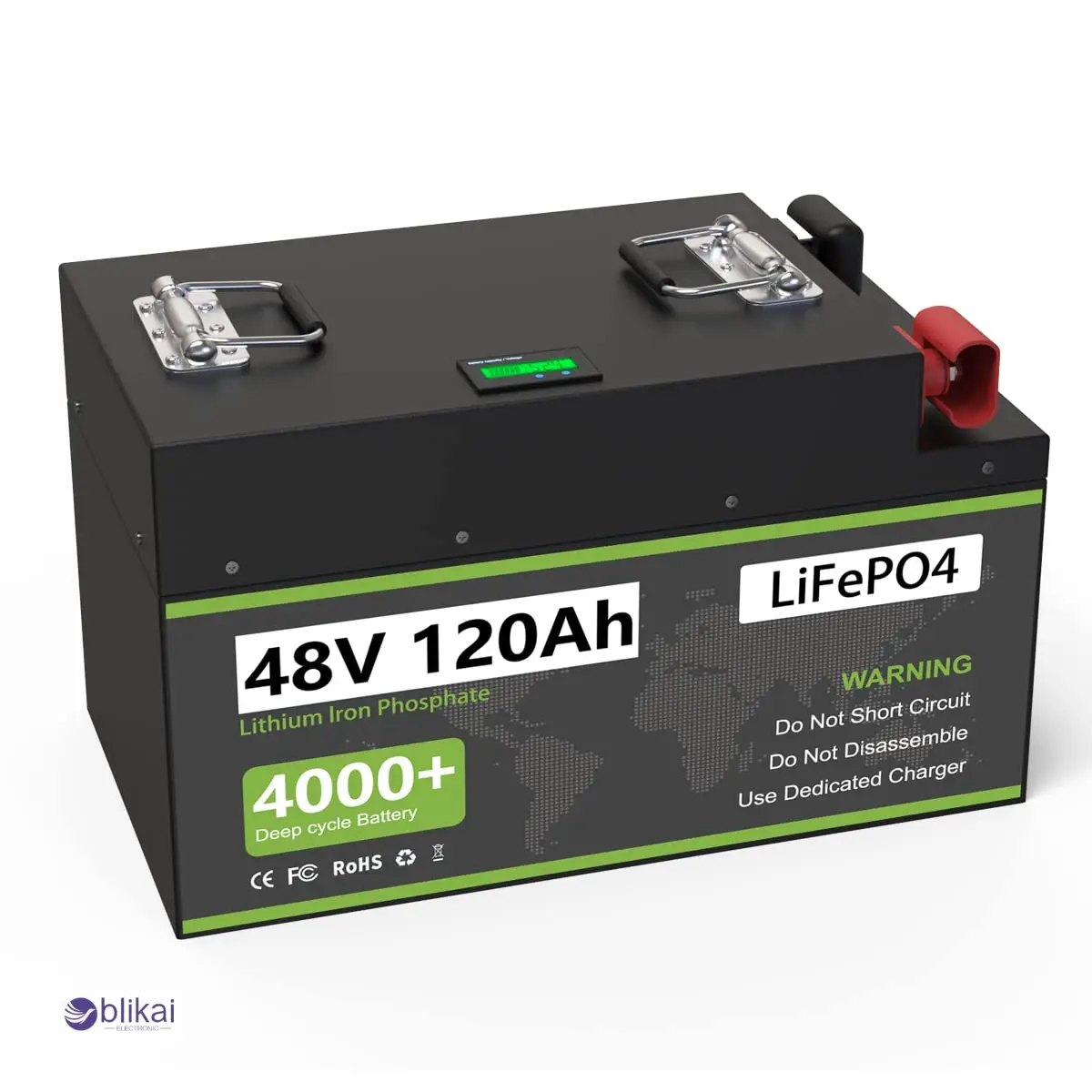
A 48V battery, also known as a battery with one or multiple small individual cells (usually lithium-ion cells or lead-acid cells), is a system with a nominal 48 volts output. This is a fair compromise in regard to safety and performance factors, and therefore can be applied in the project, where they may demand more power than a 12V or 24V battery, but not to power systems of high voltage. These are found in common in electric and hybrid automobiles, solar energy storage systems and in industrial machinery.
How Does a 48V Battery Work?
The principle of the 48 V battery is to use many little cells individually in series to form 48 volts. These cells accumulate the chemical energy and convert it into electrical energy when these batteries are discharged to produce power for devices or systems. A Battery Management System (BMS) is used to monitor the voltage, current and heat of individual cells so as to create a balance and prevent overcharging or overheating. With electric automobiles or hybrid technology, the 48 V batteries are often used as auxiliary, for example, in start-stop technology, torque assistance, or energy recuperation. The 48V system can provide the same power with less current than the lower voltage, requires less wiring, is less wasteful of energy, and also results in less heat. This flexibility of installation, reliability and manageability has made 48 V batteries widespread within the contemporary power system.
What Are the Benefits of a 48V Battery System?
- Higher Energy Efficiency
A 48V battery system minimises energy waste by making lower current levels per unit of power required as compared to lower-voltage systems. This enhances the efficiency in general and reduces heat production, which is particularly valuable in cars and industrial use.
- Enhanced Safety
At lower voltage standards, 48V batteries are less prone to electric shock, and they have fewer insulation requirements. This renders them safe to be used in residential installations, commercial installations and automotive installations.
- Cost-Effective Solution
The 48V batteries are performing well in terms of price-to-performance ratio when compared to high-voltage systems. Users can acquire sufficient power without having to purchase high-voltage and expensive components.
- Scalability
Battery modules can be easily stacked to increase storage or power capacity to 48V. This modular design enables a flexible system design without greatly complicating the system.
- Flexibility in the Contemporary Oil and Gas Systems
Battery 48V is suitable to be used in hybrid cars, energy storage in the solar system and other renewable energy applications. They are cost-effective, safe and scalable and thus are useful in various fields.
To enjoy the advantages and usage of the 48 V battery systems, we have to first of all compare them with the lower voltage batteries, such as the 12 V and 24 V batteries.
What Are the Typical Applications of 48V Batteries?
Industries that utilize these 48V batteries are many due to their efficiency, safety and scalability. They are sources of reliable power to vehicles, renewable energy, telecom, and industrial equipment.
- Hybrid and Electric Cars
MHEVs, including a start-stop system, torque prop and regenerative braking, use 48V batteries. They supply greater power than the 12 V systems, in addition to improving the performance of the vehicles.
- Solar Energy Storage Systems
Residential and commercial solar systems use 48 V batteries to store energy produced by panels to be used in the future. They are more efficient and scalable than 12V or 24V systems.
- Telecom and Data Centers
Base stations and server racks have 48V backup power. They are mid-voltage, which guarantees a stable energy supply and makes wiring less complicated.
- Industrial and Marine Equipment
Largely electric applications that include forklift vehicles, industrial robots and marine utilize 48 V batteries; these applications have heavy power requirements to conduct their operations, scalability and work in harsh environments.
What are the Distinctions Between 48V Lithium Batteries and 48V Lead-Acid Batteries?
Lithium batteries have a greater degree of density and consequently, they have more energy in the package which is less and lighter. Lifespan and maintenance also prefer lithium as they can perform more charge-discharge cycles and do not need or require very little maintenance. Alternatively, lead-based batteries are cheaper at the initial stage, but weigh more, have a reduced life cycle and are less environmentally friendly since lead is a poisonous component.
How Long Does a 48V Battery Last?
The cycle of a 48V battery life is not the same because of some specific amount of factors that include depth of discharge, working temperatures, and the quality of the Battery Management System (BMS). The Lithium batteries have a life cycle of 8-10 years, and the lead-acid batteries also have a life cycle of 3-5 years. The life of the battery can be greatly prolonged with proper use and care. These involve charging and discharging on a regular basis without completely depleting the battery and maintaining the battery at favorable temperatures. A 48V battery is also a better option due to its long-lasting performance and reliability, as well as attainability of uniform performance at 48V.
How To Maintain a 48V Battery?
- Check Wiring and Voltage on a Periodic Basis
Check all connections and levels of voltages regularly to make sure the battery system is in good operation. Corroded or loose connections may decrease the efficiency and even lead to damage.
- Avoid Extreme Temperatures
The battery should be kept at a large or medium temperature. The excessive heat might lessen the performance, reduce the life cycle and cause failure.
- Keep Batteries Well-Balanced and Healthy
The overall battery balance and health are critical for the increase in the life cycle of the battery. Adequate maintenance can guarantee reliability in vehicles, solar storage and industrial use.
Conclusion
The 48V battery provides a perfect balance of power, efficiency and safety, and therefore, it is a highly flexible option to suit present-day energy demands. Electric and hybrid vehicles, solar energy storage systems, and industrial equipment are only some of the applications that use 48 V batteries that provide stable functionality and minimize energy loss and heat. Scalability makes them competent in use, their life cycle is long, and they are easy to maintain, which makes them fit in homes and commercial environments. The appropriate solution would be a power-performing and high-quality 48 V battery that can be marketed to the customers who require an efficient and reliable source of energy, both to energize transportation or renewable energy or other essential facilities.
FAQ
Can a 12V Battery Be Replaced With a 48V Battery?
No, a 48V battery cannot be discussed as an immediate substitute for a 12V one. They also have varying levels of voltages and can destroy your system or device.
How Should a 48v Battery Be Charged?
When charging a 48V battery, one must always make sure that he has the right charger of the right voltage of 48V, and the right voltage and current rating. Do not interchange other system chargers (such as 36V or 60V). Overcharging and overheating of the battery can be prevented with the help of a Battery Management System (BMS).
Are 48V Batteries So Unsafe That They Are Not Safe Indoors?
The majority of 48V lithium batteries can be used inside a house as they are sealed and have built-in protection. However, to be on the safe side, make sure there is proper ventilation, one is not exposed to heat sources and use battery packs that are certified as UL or CE.
Some images are sourced online. Please contact us for removal if any copyright concerns arise.





