


5V Battery: Functions, Types & Common Applications
 1216
1216What Is a 5V Battery?
A 5V battery is a power installation that provides an electrical potential of five volts, thus falling under low-voltage power supplies. This voltage is sufficient to power components such as microcontrollers, sensors and LED systems and is low enough so as to avoid damage or overheating. Due to its compromise of safety and functionality, the 5V standard is popular in portable equipment, USB-powered equipment, and small automation apparatus.
Difference Between 5V Batteries and Lower-Voltage Cells
The biggest difference between the 5V batteries and the lower voltage cells is the power output and compatibility. Most 5V devices are not directly powered by a single lithium-ion cell (1.5V or 3.7V) as they are too low in voltage. A stack of cells is stacked in order to get 5V, or a voltage boost circuit is used in order to get more voltage out of it. USB-powered devices are standardised to operate at 5V, and with this level, the devices can be relied upon to perform at this voltage. By comparison, smaller-voltage batteries are used in simple electronics such as remote controls or watches. Thus, the 5V batteries are more flexible and are applied in contemporary digital technology.
Main Specifications
How Does a 5V Battery Work?
The primary operating principle of a 5V battery is that of voltage regulation and delivery of current at a regular and consistency rate. When energy is released, the internal circuit or voltage regulator keeps the output at 5 volts, although internal cell voltage can vary. This stability is crucial to those devices that need a specific voltage to perform properly, like USB-powered systems and microcontrollers.
Internal Components and Energy Storage Process
The typical 5V battery has an internal cell, a module of PCM and a voltage booster or regulator. The cells are chemically charged with energy and may be lithium-ion or lithium-polymer cells. The movement of the electrons between electrodes transforms the chemical energy when the device is in use into electrical energy. The PCM keeps an eye on temperature, voltage and current flow, eliminating overcharging or short circuits. Others are also designed with a microcontroller to control the charging cycles and enhance efficiency.
How Converters or USB Circuits Maintain 5V Output.
Most 5V batteries rely on converters or USB circuits in order to maintain a constant output voltage. Since the individual lithium-ion cells typically produce 3.7 volts, a DC-DC boost converter will be needed to increase the voltage to exactly five volts. The converter maintains the output constant as the battery goes dead, and this serves to maintain the output constant and which is to avoid unevenness in the functionality of the device. USB-based systems also include internal circuitry to control the delivery of power according to the USB standards, which ensures safe delivery of charge and energy transfer.
Types of 5V Batteries
The 5V batteries are three larger categories including rechargeable, non-rechargeable and built-in. The most common ones are rechargeable ones, and the non-rechargeable ones are used in the case of specialized devices.
Rechargeable 5V Batteries
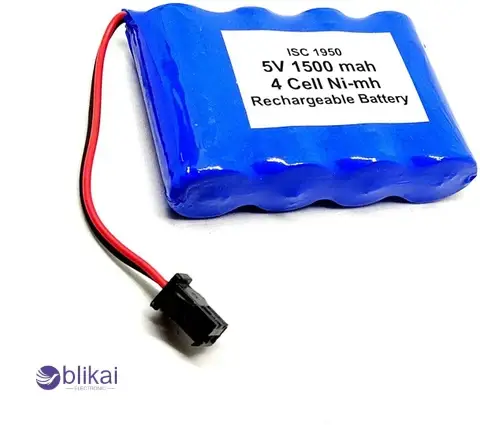
The 5V batteries are rechargeable and have either lithium-ion or lithium-polymer cells to provide constant power. They are common in USB power sources, portable fans and LEDs. With inbuilt protection circuits, they are safe, reusable and green, making them the most popular 5V source of power.
Non-Rechargeable 5V Batteries
Non-rechargeable 5V batteries are not common and are only used in certain industrial or custom electronics. They normally use a combination of primary lithium or alkaline cells to generate a constant voltage. These batteries are only applicable in low-maintenance or single-use applications, but also have short life cycles as compared to rechargeable batteries.
Built-In 5V Systems
Integrating rechargeable cells and voltage regulators into a single unit, built-in 5V battery systems are available. They are found in small portable devices such as speakers, cameras, and other small gadgets that provide 5V output via USB ports at a stable rate.
Common Applications
Due to the compatibility with USB standards and their low efficiency at low voltages, 5V batteries are used extensively. They are a reliable and secure source of power for many of our daily applications and projects. Portable devices, development boards, and 5V batteries are smooth, mobile and reliable. Their flexibility enables them to be used in different fields such as consumer electronics, education, and robotics, where the output of 5V is required in the majority of cases, to be convenient.
USB-Powered Devices
A number of USB-powered devices use 5V batteries as standard and safe power sources. Easily operating with 5V are products such as mini fans, LED desk lights, Bluetooth speakers and USB humidifiers.
DIY Electronics
Batteries with a 5V voltage are significant in powering microcontrollers and development boards such as Arduino and Raspberry Pi in DIY electronics. These systems require accuracy on a 5V input in order to operate well and prevent loss of data or components.
Portable Chargers and Backup Power Units
Portable chargers and power backup units are the most common gadgets that use 5V batteries. These devices store electric charges and release them at a controlled output of 5V of current that will best charge smartphones, tablets and other USB-powered gadgets.
Advantages of 5V Batteries
- Compatibility with USB Devices
There are 5V batteries that are compatible with the USB standard to charge the majority of devices, such as phones, fans, and speakers. Not only are adapters eliminated, but they are also compatible with a wide range of small electronics.
- Safety for Low-Voltage Systems
Their low operating voltage makes 5V batteries safe for daily electronics. Inbuilt defence circuits keep the charge against overcharging, short circuiting and overheating, so that most portable devices operate safely and stably.
- High Energy Efficiency
The 5V batteries also possess a constant power supply, which minimizes wastage and also ensures that the entire installation is not subjected to fluctuation of voltage.
- Portability and Convenience
5V batteries are lightweight and easy to carry, as well as recharged. Their USB output enables the use of the gadgets to be used when travelling or outdoors since they can be linked to other gadgets in a short time.
- Environmental Benefits
Electrical batteries are able to be charged, and hence reduce non-recyclable waste and enhance sustainability. Their recharge capacity and long life span lower the application of the disposable batteries, which leads to a lower environmental impact.
Disadvantages of 5V Batteries
- Limited Power Output
Low-power devices can only be supported using 5V batteries. They cannot be used in large equipment or tools that may demand higher levels of voltage or current to be efficient.
- Voltage Mismatch Risks
It is harmful or disruptive to hook 5V batteries in appliances that need other voltages. When plugging sensitive or high-voltage electronics, always make sure it fits.
- Shorter Operating Time
The devices with high demand draw batteries rapidly, depleting the 5V, and decreasing the run time.
- Charging and Maintenance Requirements
Misuse of the charge may result in reduced life or overheating. Certified chargers and not overcharging are some of the measures that can be used to keep batteries safe and functional.
- Temperature Sensitivity
There is a performance that is influenced by extreme temperatures. High temperatures may cause swelling in high temperatures and low demand in terms of capacity and efficiency in cold storage and handling.
Maintenance and Safety Tips
Proper Charging Habits and Storage
Install chargers that are of the voltage and current specifications of the manufacturer. Do not fast charge when it is not in it. Batteries should be stored at 40-60 percent charge in cool, dry conditions (15-25°C). Should not be subjected to complete discharge, should not be kept in direct sunshine, or in a wet state to reduce chemical degradation.
How to Identify Damaged or Unsafe Batteries
Check batteries against swelling, leakage, corrosion or excess heat. Any deformation or chemical odor denotes internal failure. Stop usage, and put the battery in a non-conductive container. Never puncture, compress, or short damaged cells as this may cause thermal runaway or fire.
Disposal and Recycling Methods
Dispose of 5V batteries in accordance with local e-waste policies. Place insulating tape over the covers before recycling. The spent cells were sent to certified collection locations or take-back programs by manufacturers.
Conclusion
The 5V battery has become a universal standard of power in the modern electronic ecosystem, and it offers a safe, efficient, and universally compatible power source to millions of devices. The fixed voltage output is fully compatible with the USB interface and can be easily integrated with all modern technologies, starting with smartphones and portable lights and going all the way to robotics and IoT systems. Due to the development of the lithium-ion and lithium-polymer chemistries, 5V batteries can now have a greater energy density, increased life expectancy and enhanced safety mechanisms. The 5V battery will remain as a pillar of portable power solutions as energy efficiency and miniaturization remain on the innovation edge: a trade-off of reliability, safety and sustainability, in consumer and industrial applications.
FAQs
How long does a 5V battery last?
The 5V battery 10.000mAh ought to be utilized in the equipment of low power with a run time of 4-8 hours, though with proper handling, hundreds of launches can be achieved.
Can I replace a 5V battery with a 3.7V one?
No. A battery of 3.7V is insufficient to supply 5V devices. It may cause malfunction or unstable operations of the majority of electronics unless it is equipped with a boost converter.
Some images are sourced online. Please contact us for removal if any copyright concerns arise.





