


Inverter vs Transformer: Key Differences & Applications
 496
496Introduction to Inverters and Transformers
The inverter and transformers are two basic elements of electrical and electronic power systems, which are often confused or mistaken for being similar. They are prevalent in the conversion of power, the distribution of energy and in electronic equipment, but operate on entirely different principles and perform different functions in a system. This is critical because engineers, system designers and buyers who will select components that will be used in applications as diverse as renewable energy and industrial automation, as well as consumer electronics and power supplies, need to know the difference between an inverter and a transformer.
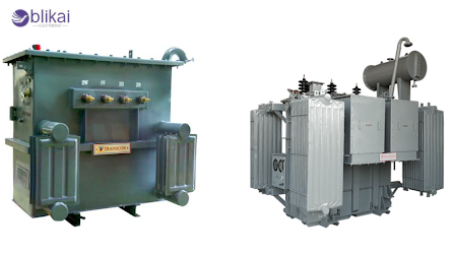
What Is an Inverter?
An inverter is a power electronic component which is an active power electronic device, which converts direct current (DC) to alternating current (AC), allowing DC power sources, including batteries, solar panels or DC buses, to power loads that demand particular voltage and frequency properties.
Definition and Basic Function
The main purpose of inverters is to convert DC to AC, convert fixed or variable DC input to an AC output with a controllable voltage, frequency and waveform. In contrast to passive parts, an inverter is an active power processing device, in which semiconductor switches and control circuits are used, and is a central building block in modern power electronics.
How an Inverter Works
An inverter operates by the mechanism of a fast alternating sequence of on and off switches of electronics, such as MOSFETs or IGBTs, in a specified order to generate a pulsating voltage, which is subsequently converted into an AC waveform via modulation schemes such as pulse-width modulation (PWM). This waveform is optimized into a square wave, modified sine wave or pure sine wave AC, depending on the complexity of the design and the demands of the application.
What Is a Transformer?
A transformer is a passive electromagnetic device that transfers electrical energy between circuits using magnetic induction, primarily to change voltage levels or provide electrical isolation within AC power systems.
Definition and Core Purpose
The fundamental aim of a transformer is to convert AC to AC voltage, at the same frequency, without altering frequency, enabling voltage to be stepped up or stepped down effectively to transmit, distribute or fit the equipment. Unlike an inverter, a transformer cannot generate power or alter waveform characteristics.
Working Principle of a Transformer
Transformers operate on the principle of the law of electromagnetic induction, as put forward by Faraday, in which an alternating current in the primary winding causes a varying magnetic flux in the core, which produces a similar voltage in the secondary winding. Transformers are quite predictable and reliable, as the turns ratio between the windings determines the voltage ratio.
Inverter vs Transformer: Core Differences
Power Conversion Capability
The most basic distinction between an inverter and a transformer is power conversion: an inverter can convert DC power into AC power; a transformer can convert the power into AC power only and cannot work with the power that has a DC value.
Input and Output Power Types
DC input inverters convert into AC output with parameters under control, unlike transformers, which have to take a DC input and produce an AC output at a different voltage level but the same frequency.
Active vs Passive Device Comparison
An inverter is an active electronic system containing control logic, switching devices, and protection circuits, while a transformer is a passive component relying solely on electromagnetic coupling, resulting in lower complexity and higher inherent reliability.
Frequency Dependency
Inverters can generate AC at variable or fixed frequencies independent of input conditions, while transformers are frequency-dependent devices whose size, efficiency, and performance are directly tied to operating frequency.
Efficiency and Energy Losses
Inverter efficiency is influenced by switching losses, conduction losses, and control overhead, whereas transformer losses are mainly due to copper losses and core losses, with efficiency improving at optimal load conditions.
Structural and Component Differences
Key Components in an Inverter
An inverter consists of semiconductor switches, gate drivers, control ICs or microcontrollers, DC-link capacitors, output filters, and protection circuits, forming a complex but highly flexible power conversion system.
Key Components in a Transformer
A transformer is constructed by using windings of conductive material, a core of laminated steel or ferrite, insulation material, and an enclosure to provide a protective casing, which makes the transformer a mechanically simple and strong device.
Size, Weight, and Complexity Comparison
Low-frequency transformers are usually large and heavy, whereas high-frequency switching in conjunction with small transformers is used to reduce size and weight, particularly in switch-mode power supplies.
Typical Applications of Inverters
Renewable Energy Systems
The panels or turbines in solar and wind power systems produce DC energy, which is then converted into AC power compatible with the grid by inverters, so that the energy can be used effectively and connected to the grid.
Uninterruptible Power Supplies (UPS)
UPS systems are specified to use inverters to supply the gaps of power in the utility during an outage to allow operation of vital equipment using uninterrupted power from batteries.
Motor Drives and Variable Frequency Drives
Inverters are used in industrial automation to regulate the speed and torque of the motor by varying the output frequency and voltage, and are much more energy efficient and have enhanced control of the process.
Automotive and EV Applications
Inverters are an integral part of the modern transportation system by virtue of their use in electric vehicles and automotive electronics to power AC motors off the DC battery packs.
Typical Applications of Transformers
Power Transmission and Distribution
Transformers permit long-distance transmission of electrical energy with efficiency by increasing and decreasing voltage to transmit and make it safe to distribute to the final consumers.
Power Supplies and Adapters
Linear power supplies and adapters also have a large use of transformers to convert and isolate voltage between mains power and electronic circuits, and to isolate between galvanic potentials (such as mains power and electronic circuits).
Signal Isolation and Noise Reduction
In measurement, audio, and communication systems, transformers provide isolation and impedance matching, reducing noise and improving signal integrity.
Can an Inverter Replace a Transformer?
A transformer cannot be directly substituted by an inverter due to the radically different functions they fulfill, but in most of the new systems, volume transformation, isolation and waveform control are all accomplished using the same power conversion architecture by combining inverters with high-frequency transformers.
Inverter and Transformer Used Together in Power Systems
In switch-mode power supplies, UPS systems, and industrial inverters, a high-frequency transformer is often integrated after the inverter stage to provide voltage scaling and isolation, demonstrating that these devices are complementary rather than interchangeable.
Advantages and Limitations Comparison
Advantages of Inverters
Inverters offer precise control over voltage and frequency, compatibility with renewable energy sources, and adaptability across a wide range of power levels and applications.
Advantages of Transformers
Transformers provide simplicity, high efficiency, excellent electrical isolation, and long service life with minimal maintenance requirements.
Limitations of Each Technology
Transformers have frequency limits and cannot use DC power, whereas inverters are more complicated and prone to environmental conditions.
How to Choose Between an Inverter and a Transformer
The choice of either an inverter or a transformer is based on the type of power source, the nature of output needed which must be met, the desired efficiency which must be met, safety and complexities in a system, where in many real-life systems both devices are used to ensure that the system achieves optimal performance by combining the two devices.
Inverter vs Transformer: Comparison Table
|
Feature |
Inverter |
Transformer |
|
Power Conversion |
DC to AC |
AC to AC |
|
Input Power Type |
Direct Current (DC) |
Alternating Current (AC) |
|
Output Frequency |
Fixed or adjustable |
Same as input |
|
Device Type |
Active electronic device |
Passive electromagnetic device |
|
Main Components |
Semiconductors, control circuits, filters |
Windings, magnetic core |
|
Voltage Transformation |
Via electronic switching and control |
Via turns ratio |
|
Isolation Capability |
Optional (with transformer stage) |
Inherent galvanic isolation |
|
Typical Applications |
Solar systems, UPS, motor drives |
Power distribution, isolation, adapters |
FAQ
Is an inverter the same as a transformer?
No, an inverter converts DC to AC using active electronics, while a transformer only changes AC voltage levels using electromagnetic induction.
Does an inverter need a transformer?
Several inverters incorporate a transformer within them to convert the voltage and isolate the voltage, but the inverter does the DCtoAC conversion.
Can a transformer work with DC power?
A transformer cannot work with DC since its operation involves the existence of a changing magnetic field, which is produced by alternating current.
Which is more efficient, an inverter or a transformer?
Efficiency depends on application and design, but transformers generally have very high efficiency at rated frequency, while inverters offer flexibility at the cost of higher complexity.
Conclusion
Inverters and transformers serve fundamentally different yet complementary roles in electrical and electronic systems, with inverters enabling DC-to-AC power conversion and transformers providing efficient voltage transformation and isolation. Understanding their differences allows engineers and system designers to build efficient, safe, and reliable power solutions tailored to modern energy and electronic demands.
Some images are sourced online. Please contact us for removal if any copyright concerns arise.





