


What Is a Tire Pressure Sensor? TPMS Working Explained
 409
409Introduction to Tire Pressure Sensors (TPMS)
A tire pressure sensor is an important automotive electronic device that is also used to check the air pressure levels constantly in vehicle tires and relay real-time information to the driver or vehicle control system. With the growing dependence of modern automobiles on electronic sensing and control mechanisms, Tire Pressure Monitoring Systems (TPMS) have become a common safety device that is required in most locations in order to minimize the number of accidents that result from deflated tires. Electronically, TPMS combines microcontrollers, pressure sensors, wireless communication circuitry and power management circuit boards into a small, ruggedized sensor circuit board that can function in severe automotive conditions.
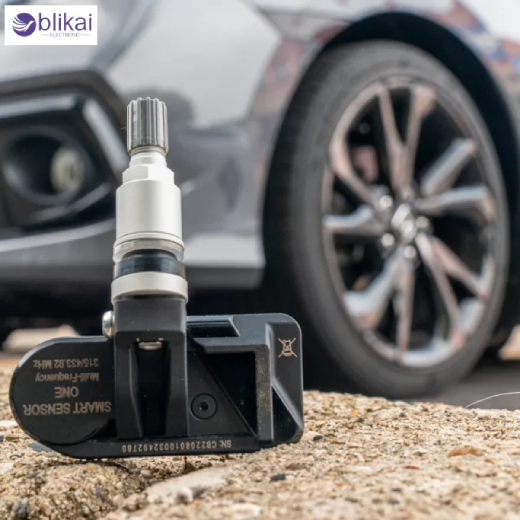
What Is a Tire Pressure Sensor?
A Tire Pressure Sensor is defined as a device that measures the air pressure within the tire cavity and transmits the information to the car’s control unit (Hill, 2009). A tire pressure sensor is an integrated electronic sensor, which measures the pressure in air in a pneumatic tire and transforms this physical value into an electrical signal. The signal is used and sent to the Electronic Control Unit (ECU) of the vehicle or the dashboard display so that tire inflation status could be continuously monitored. In contrast to mechanical pressure gauges, TPMS sensors are based on pressure sensing technologies based on semiconductors and are therefore part of automotive sensor networks in modern cars.
How Does a Tire Pressure Sensor Work?
Basic Working Principle of TPMS
The principle of operation of a tire pressure sensor is that the sensor identifies the fact of air pressure changes within a tire and translates its values into digital information. A pressure sensitive element reacts to the deformation of internal air pressure and produces corresponding electrical output. This signal is amplified, converted to digital form and an onboard microcontroller processes it and wirelessly sends out the pressure data to the receiving module of the vehicle where it is analyzed and displayed.
Key Electronic Components Inside a TPMS Sensor
An average TPMS sensor consists of several electronic units such as MEMS pressure sensor, low power microcontroller unit (MCU), RF transmitter, temperature sensor and a lithium battery. The pressure sensor is a sensor that identifies tire pressure and the MCU implements the raw sensor readings and calibration algorithms. The RF module sends coded messages in standard frequencies and the battery supplies power over extended time under extreme temperatures and vibrations.
Signal Transmission to the Vehicle ECU
Once processed, TPMS data is transmitted wirelessly using radio frequency signals, commonly in the 315 MHz or 433 MHz bands, to a TPMS receiver connected to the vehicle ECU. This data is interpreted by ECU and compared against preset values where dashboard warnings are triggered in case of abnormal pressure conditions. This wireless communication does not require any physical wiring thus enhancing reliability of the system and also it makes it easy to install.
Types of Tire Pressure Monitoring Systems
Direct TPMS
Direct TPMS uses dedicated tire pressure sensors mounted inside each wheel, typically on the valve stem or rim. These are direct tire pressure and temperature sensors which provide a high level of accuracy and quick response. Electronically, direct TPMS uses specific pressure sensors and RF communication circuits, which is why it is the most advantageous in the case of the vehicles, which have to monitor precisely pressure and real-time.
Indirect TPMS
The indirect TPMS does not require any physical pressure sensors in the tire, but measures the tire pressure by using wheel speed sensor data (ABS sensors) to estimate tire pressure. Tires that are underinflated have varied speeds because of the lower diameter, and the system identifies such variations in an algorithmic manner. Direct TPMS offers greater hardware cost efficiency and complexity whereas indirect TPMS does not have the accuracy of real-time measurements or precision of direct sensor-based systems.
Direct vs Indirect TPMS Comparison
Direct TPMS is more accurate, quicker in detection, and actual pressure readings whereas indirect TPMS has a cheaper solution with less electronic components. Nonetheless, indirect systems need to be recalibrated when rotating or changing tires and cannot show the actual pressure levels. From a component and performance perspective, direct TPMS is generally favored in modern passenger vehicles and electric cars.
Key Specifications of Tire Pressure Sensors
Pressure Range and Accuracy
Tire pressure sensors are engineered to work within a certain pressure range usually 0 to 800 kPa with the level of accuracy used to identify slight differences that affect the safety of vehicles. The MEMS sensors are very precise and this ensures that there is a stable performance between variations in temperature and long life of service.
Operating Frequency (315 MHz / 433 MHz)
TPMS sensors operate at standardized RF frequencies, most commonly 315 MHz in North America and 433 MHz in Europe and Asia. The choice of these frequencies is to balance the reliability of transmission, low consumption of power and to conform to the local wireless regulations.
Battery Life and Power Consumption
Battery life is another serious specification of the TPMS sensors since the majority are sealed and can not be replaced. Sleep states, low-power MCUs and effective RF transmission protocols allow most battery life of 5 to 10 years, the same as the average tire service interval.
Common Applications of Tire Pressure Sensors
Passenger Vehicles
TPMS sensors are safety features in passenger cars which increase the awareness of a driver and the performance of the vehicle. They have been incorporated into the electronics of the vehicle and facilitate advanced driver assistant systems.
Commercial Trucks and Buses
Commercial vehicles use TPMS to deal with heavy loads and long-range transportation where inappropriate tire pressure may cause serious safety threats and operational expenses. Monitoring using sensors enhances efficiency in the fleets as well as decreasing downtime.
Electric Vehicles and Autonomous Cars
TPMS is only one of several sensor systems employed in electric and autonomous vehicles, and these include battery management, motor control and vehicle dynamics systems. The exact information about the tire pressure is important to the maximization of energy consumption and autonomous driving software.
Common TPMS Sensor Problems and Troubleshooting
Low Battery and Sensor Failure
One of the most common issues of TPMS that leads to intermittent or total sensor failure is battery depletion. This activates the dashboard warning lights when the battery is weak thus making it unreliable in transferring signals.
Signal Loss and Communication Errors
RF interference, damaged antennas, or ECU communication faults can cause signal loss between the TPMS sensor and receiver. Sensor ID, RF frequency compatibility and receiver functionality must be checked using the proper diagnostics.
TPMS Warning Light Issues
A persistent TPMS warning light may indicate sensor malfunction, incorrect tire pressure, or system calibration errors. Knowledge of electronic and software features of TPMS allows determining the root cause and doing it effectively.
Tire Pressure Sensor Replacement and Maintenance
When Should a TPMS Sensor Be Replaced?
TPMS sensors are to be replaced in the cases of the end of battery life, physical damage, or a change of tires in case the reliability of the sensors is doubtful.
Relearning and Reprogramming TPMS Sensors
After sensor replacement or tire rotation, TPMS systems often require relearning procedures to synchronize sensor IDs with the ECU. This can be done through diagnostic tools or certain driving patterns that are stipulated by the car manufacturer.
Advantages and Disadvantages of Tire Pressure Sensors
Benefits for Safety and Fuel Efficiency
Tire pressure sensors contribute to safety, fuel consumption and longevity of tires since they maintain optimal pressure in tires. Their integration into vehicle electronics supports predictive maintenance and smarter driving decisions.
Limitations and Environmental Constraints
Limitations are presented which include a limited battery life of TPMS sensors, extreme temperatures, and mechanical forces. These aspects have to be taken care of by means of effective electronic design and maintenance procedures.
Future Trends in Tire Pressure Sensor Technology
The TPMS technology of the future is heading towards ultra-low-power sensor ICs, energy harvesting, integrated multi-sensor modules as well as improved wireless protocols. Intelligent TPMS systems can include live cloud connectivity, predictive analytics, and a further increase in the integration with autonomous vehicle systems, extending the purpose of tire pressure sensors in an intelligent transportation system.
FAQs
What does a tire pressure sensor do?
A tire pressure sensor is automatic and it is installed in a tire to monitor air pressure within a tire and transmit real time information to the car system as a warning to the driver in case of underinflation or other anomalous conditions.
How long does a TPMS sensor last?
The usual life of most TPMS sensors is between 5 to 10 years, or it can be determined by the battery capacity, driving, and environmental exposure.
Can you drive with a faulty tire pressure sensor?
You can drive with a faulty TPMS sensor, but you lose real-time pressure monitoring, increasing the risk of tire-related safety issues.
Are all TPMS sensors universal?
No, TPMS sensors differ in frequency, protocol, and vehicle compliance, which is why it is necessary to select the right one to ensure the successful work.
Some images are sourced online. Please contact us for removal if any copyright concerns arise.





